
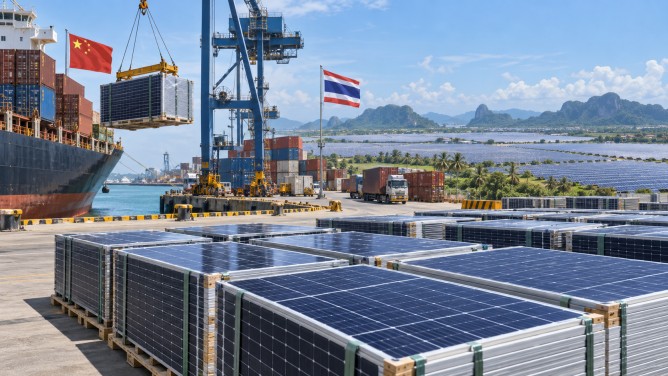
Thailand’s solar panel imports have experienced a dramatic increase, growing by 88.7% to reach $426.7 million in the first seven months of 2026, according to data from the Ministry of Commerce and Customs Department. This surge is largely driven by imports from China, which accounted for 99.3% of the total, amounting to $423.9 million—a 107.1% rise compared to the same period last year.
The significant uptick in imports aligns with Thailand’s upcoming household solar installation program, which aims to subsidize solar panel costs by approximately THB50,000 per household. The initiative is initially targeting one million households, with plans to potentially expand to 1.5 million. This program is part of a broader effort to promote renewable energy and reduce household electricity expenses across the country.
While China dominates the import market, Singapore and Hong Kong also contribute, albeit marginally, each comprising about 0.3% of Thailand’s total solar panel import value. The Thai government is concurrently exploring strategies to bolster domestic solar manufacturing capacity. Collaborations with the Ministry of Labour are underway to train workers in essential skills such as solar panel assembly, installation, and maintenance.
Further discussions with Thailand’s Board of Investment are focusing on reducing duties for production inputs that are not locally available, a move that could enhance the competitiveness of domestic solar manufacturing. These efforts are aimed at fostering a robust clean-energy supply chain within the country, encouraging both rooftop and ground-mounted solar installations.
Overall, Thailand’s strategic shift towards solar energy reflects its commitment to sustainable development and energy independence. By reducing reliance on imported solar panels and nurturing local production capabilities, the nation aims to establish a self-sustaining clean-energy infrastructure that benefits both the environment and the economy.