
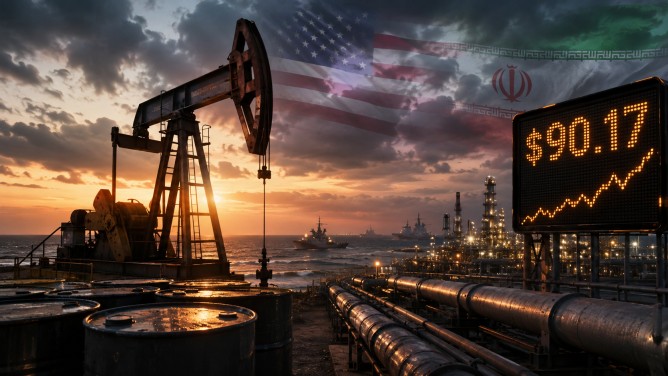
Oil prices have surged as the two-month negotiation period between the United States and Iran ended without reaching a peace agreement. This development has intensified concerns about the ongoing conflict’s impact on global energy supplies. Brent crude has seen a notable rise, surpassing $90 per barrel and hitting approximately $91.63, marking its highest level since July 30. The price increase follows U.S. President Donald Trump’s demand for Iran to surrender and his warning of potential escalation if diplomatic talks falter.
The situation has heightened anxieties over the Strait of Hormuz, a vital passage for global oil shipments. The number of commercial vessels traversing this key route has declined significantly, amplifying fears about prolonged disruptions in oil supplies. Iran has suggested it might adopt a more assertive military approach if negotiations continue to stall. Reports of an attack on a cargo ship navigating the strait have further raised alarms regarding the safety of maritime traffic in the area.
Investors are now bracing for the possibility of extended disruptions to oil supplies, particularly if the Strait of Hormuz faces prolonged closure or reduced traffic. Such scenarios could exert additional upward pressure on crude oil prices, complicating the global energy market’s stability. Analysts caution that the persistent conflict in the Middle East, coupled with the ongoing war in Ukraine, could result in further shocks to global energy markets, potentially driving oil and gas prices higher.
As the geopolitical tensions surrounding the Strait of Hormuz and broader Middle East continue to unfold, the potential for further escalation remains a significant concern. The international community watches closely as the situation develops, with the potential for far-reaching implications on the global economy, particularly in energy markets. The lack of resolution in negotiations between the U.S. and Iran underscores the fragility of current diplomatic efforts and the complex dynamics at play in the region.